Tuesday, May 15, 2012

Hartford Convention

a. Meeting of Federalists party leaders during the War of 1812
b. Trying one last time to hold power
c. They met to discuss certain issues
d. Talk of secession by northern states
e. Leaving the US and making a new country
f. The meeting showed Sectionalism 
    (division between north and south) 
g. When the War of 1812 was over, the Republicans were the     heroes and the Federalists were pretty much done as a political party


War of 1812 (Embargo Act, Impressment, War Hawks, Washington, DC, New Orleans, Nationalism)

a.      Embargo Act of 1807
                 i. After an attack on the US ship “Chesapeake” in 1807 by the British, Jefferson responded
               ii. Embargo Act:  the US wouldn’t trade with countries that impressed our sailors
             iii.  Hurt the US more than other countries
             iv. Jefferson was President
              v.  Backfired on Jefferson and hurt the economy
              vi. Jefferson didn’t seek a third term, but selected his                    successor
           vii.  Secretary of State:  James Madison; helped to buy Louisiana
         viii. VP didn’t mean much as an office
b.     Impressment
                 i.  Taking of sailors from US ships to British ships
               ii.  Hamilton urged peace (supports British) and Republicans wanted war
c.      War hawks
                 i.     In 1810, Congressional elections were held and a groups named the War Hawks were elected
               ii.     Congressmen; born in US; from South and West
             iii.     Supported war against Britain
d.     Washington, DC
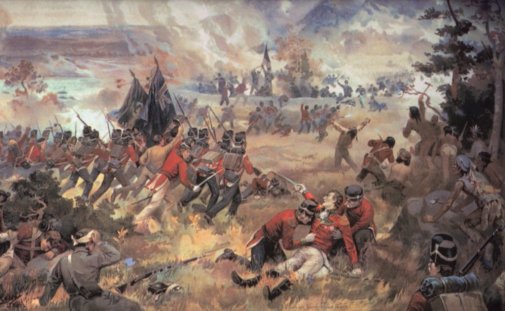
            i.     War of 1812
1.     1814-Chesapeake Bay
a. British took Washington, DC, and burned the 
   Capitol and White House
b. Madison fled west
c. British troops at the meal prepared for the President before burning it
e.      New Orleans 1815
                 i.     Fought after the peace treaty was signed
               ii.     Andrew Jackson made a hero
             iii.     The US was outnumbered greatly, but had only 45 deaths compared to 2000 British
f.      Nationalism
                 i.     Result of the War of 1812
               ii.     The country is brought together


Louisiana Purchase

a. Bought from France
b. We originally wanted to buy New Orleans
c. Bought for 15 million; about 3 cents an acre
d. Doubles the size of the US
e. Jefferson’s dilemma: Constitution said
    nothing about buying land

Marbury v. Madison

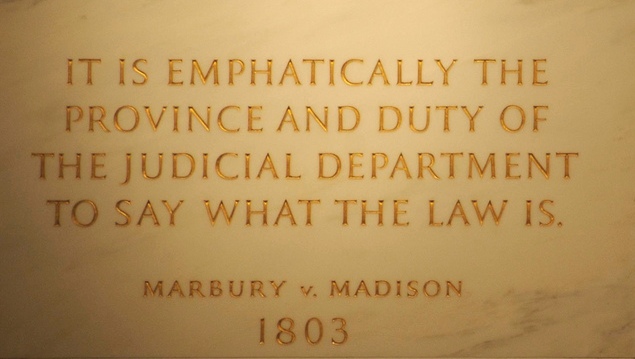
a. Judicial review was established in this case
b. Courts can declare a law unconstitutional; called part of the  Judiciary Act, 1789 unconstitutional
c. Sec. Of State Madison didn’t deliver the appointment of the judgeship to William Marbury (FED) and he asked the Supreme Court to make a ruling
d. John Marshall had to make a decision that wouldn’t be ignored, but who would he support?
e. Part of the Judiciary Act, 1789 was unconstitutional and Marbury could come straight to the Supreme Court
f. Midnight judges laws later overturned, but many left in power


Alien and Sedition Acts / Virginia and Kentucky Resolutions (Nullification)

a.      Alien and Sedition Acts
               i. Allowed the President to deport or jail immigrants; many immigrants supported Anti-Feds.
               ii. No one could write anything bad about the President
               iii. Each party had their own newspapers and wrote bad things about each other
               iv. Federalists were trying to end Republican power by attacking immigrants
               v. What amendment is this a violation of? – 1st Amendment
b.     Virginia and Kentucky Resolutions
                i.James Madison and Thomas Jefferson wrote the Virginia and Kentucky Resolutions
                ii.Called A&S Acts unconstitutional and for states to nullify the federal law; 10th Amendment (states’ rights)
                
              iii.No one did……example of federal over state law


Washington's Farewell Adress

a.Washington served two terms and decided that was enough
b. Policy of Neutrality
c. He warned the US against:
              i. Political parties (factions)
              ii. Making allies
              iii. Sectionalism -> region before country -> division between North and South
              iv. National Debit/ Credit: never spend more than you have to
               v. Election of men of no character (moral, religious, practical)

Whiskey Rebellion

a. Rebellion against taxes on the frontier of Pennsylvania
b. Washington sent 15,000 militia (national guard) to suppress the conflict
    -Federal authority is proven in domestic issue
    -Backlash= growth of Democratic/Republican party- loss of political power in Congress by the federalist party
c. Leads to more support for the Republican Party among the common people
d. Some saw the Federalists were seen as a party against the common people